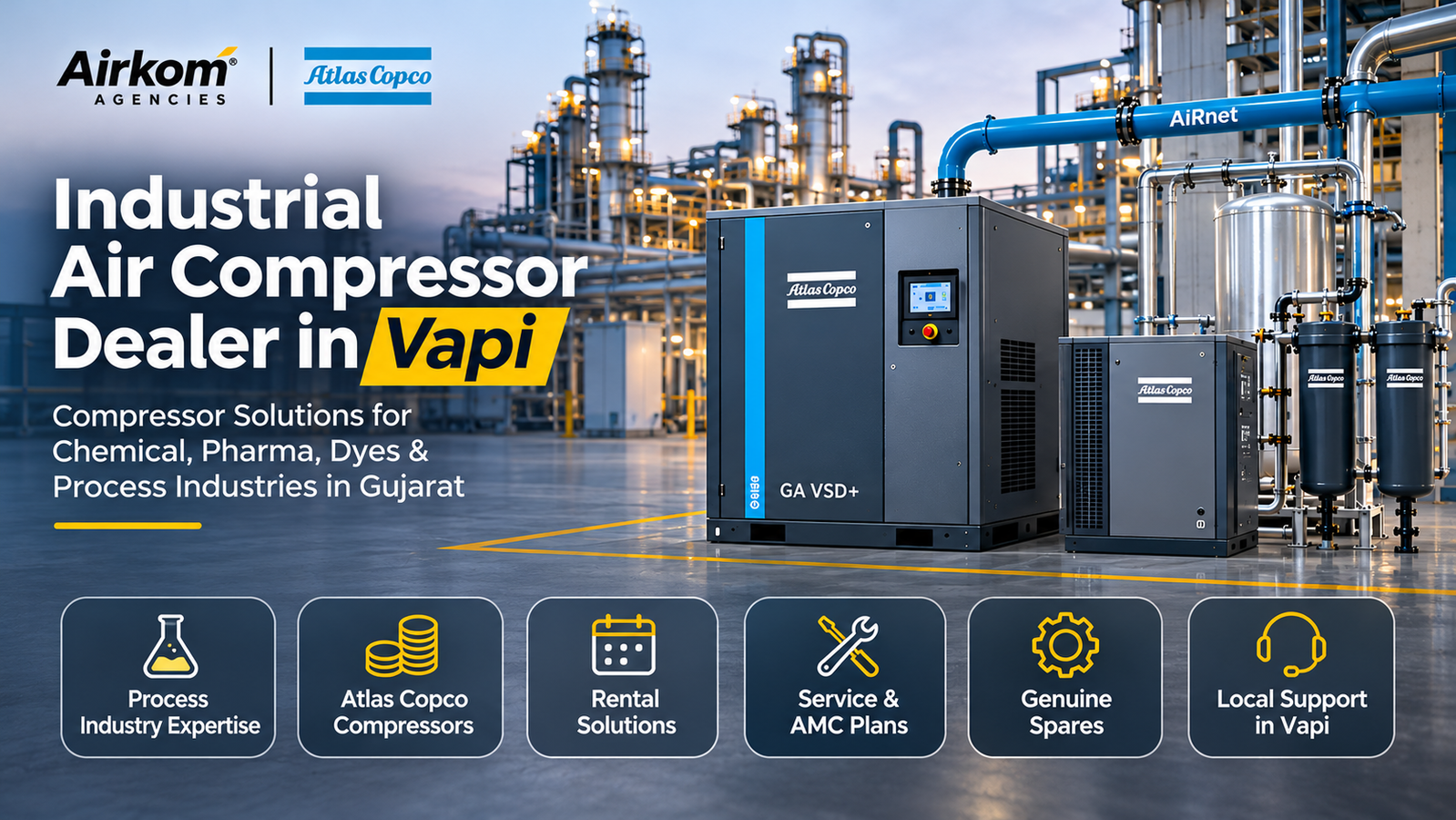
Vapi's industrial estate runs on process plants: chemicals, dyes and pigments, pharmaceuticals, plastics, paper and engineering units, packed close together and running long hours. For these plants, compressed air is not a convenience. It drives instrument air, valves, pneumatic conveying, packaging lines and, in many cases, the process itself. When a compressor stops, a batch can be lost, a line can back up and a whole shift can go to waste.
That is why choosing an air compressor dealer in Vapi is a different decision from choosing one for a light workshop. This guide explains what plants in Vapi and the wider Gujarat belt should look for in a supplier, what decides the cost of an Atlas Copco compressor, how air needs differ between chemical, pharma and dyes units, and how to protect yourself from downtime through service, spares and backup.
What makes compressed air different in a Vapi process plant
Compared with a general fabrication shop, process industries put more demands on the air system.
- Continuous running. Many plants operate around the clock, so the compressor may run 8,000 hours or more a year. Small inefficiencies add up quickly, and a breakdown is expensive.
- Air quality sensitivity. Pharma intermediates, specialty chemicals and food-grade products can be spoilt by oil, moisture or particles in the air.
- Harsh surroundings. Chemical vapours, dust and warm, humid air attack equipment, electrical parts and pipework.
- Process links. Compressed air often feeds instruments, control valves and actuators. Wet or unstable air shows up as control problems and nuisance trips.
- Other gases and utilities. Many plants also use nitrogen for blanketing and purging, and blowers for effluent treatment.
A dealer who understands these conditions will ask about your process before suggesting a machine. One who simply quotes a model from the shelf may leave you with a system that is under-specified in the places that matter.
Matching the air system to your industry
Chemical and petrochemical plants
Instrument air must be dry and clean, since moisture in control lines causes sticking valves and false readings. Dryers should be selected to give a dew point well below the lowest temperature the lines will see. In plants where air lines run outdoors, a lower dew point protects against condensation and corrosion. Where there are solvents or chemical vapours in the surroundings, pay attention to where the compressor draws its intake air, so that it does not pull in contaminated air. Check material choices and enclosure ratings with the manufacturer for your specific environment.
Pharmaceutical and API units
Where air touches the product or the packaging, oil-free compressors are the usual choice, together with dryers and filters that deliver the purity class set in your quality system. ISO 8573-1 is the standard used to specify air purity for particles, water and oil. Plan for validation and documentation, including filter change records and periodic air quality testing. Energy efficiency also matters, since pharma plants run long hours.
Dyes, pigments and textile processing
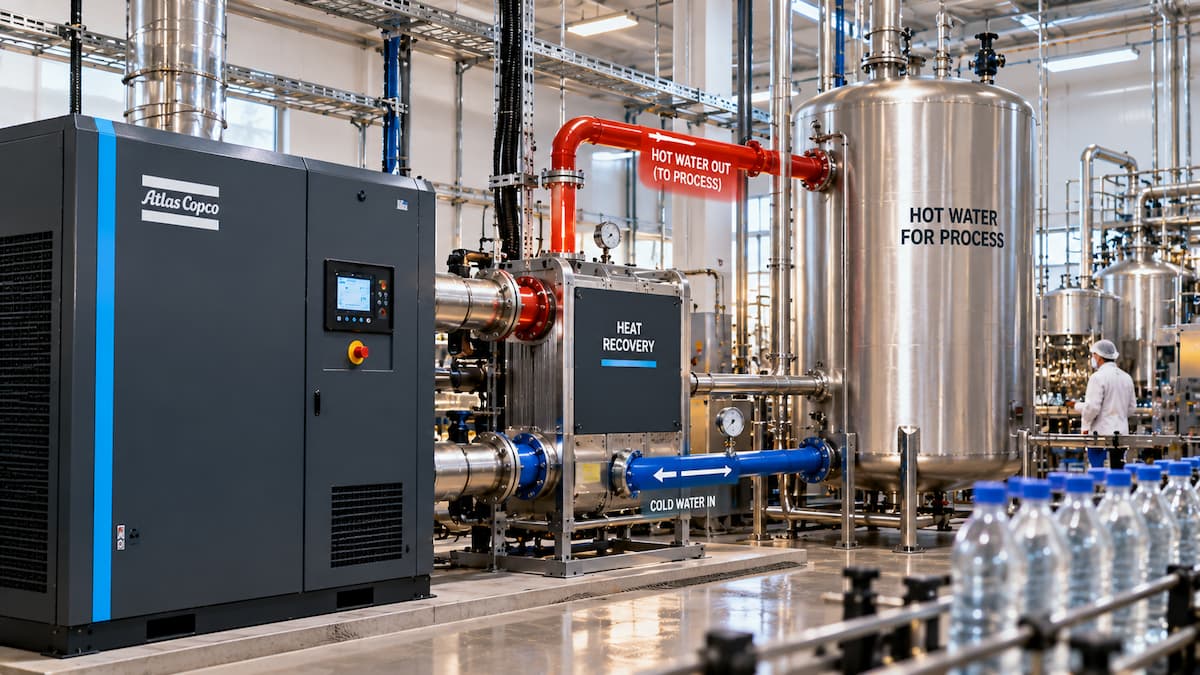
Air is used for agitation, transfer, pneumatic valves, packing and cleaning. Moisture and dust are the main concerns. Humid conditions mean dryers need to be sized for the worst day, and powders and pigments mean filters and the compressor intake need regular cleaning. Dye houses also use hot water in large amounts, which makes compressor heat recovery worth considering.
Plastics and packaging
Blow moulding, injection moulding and packaging lines need steady pressure and dry air. Pressure drop at the machine shows up as short shots, weak seals and slow cycles. A VSD compressor, correct pipe sizing and a good dryer usually solve most of these.
Paper and pulp
Dusty conditions and large air volumes make intake filtration, cooling and maintenance a priority. Choose machines with robust cooling and plan frequent checks of filters and coolers.
Effluent treatment
Aeration needs low-pressure air at high volume, which is better served by blowers than by high-pressure compressors. Using a screw compressor for this job wastes energy. If your plant has an effluent treatment plant, ask your supplier about the blower range as well.
What decides the price of an Atlas Copco compressor
When buyers search for the price of an Atlas Copco air compressor in Vapi, they usually hope for one number. In practice, price depends on a handful of choices, and understanding them helps you ask for the right quotation.
- Air delivery and pressure. The free air delivery (FAD) in cubic metres per minute at your working pressure, rather than motor power alone, is what you are buying.
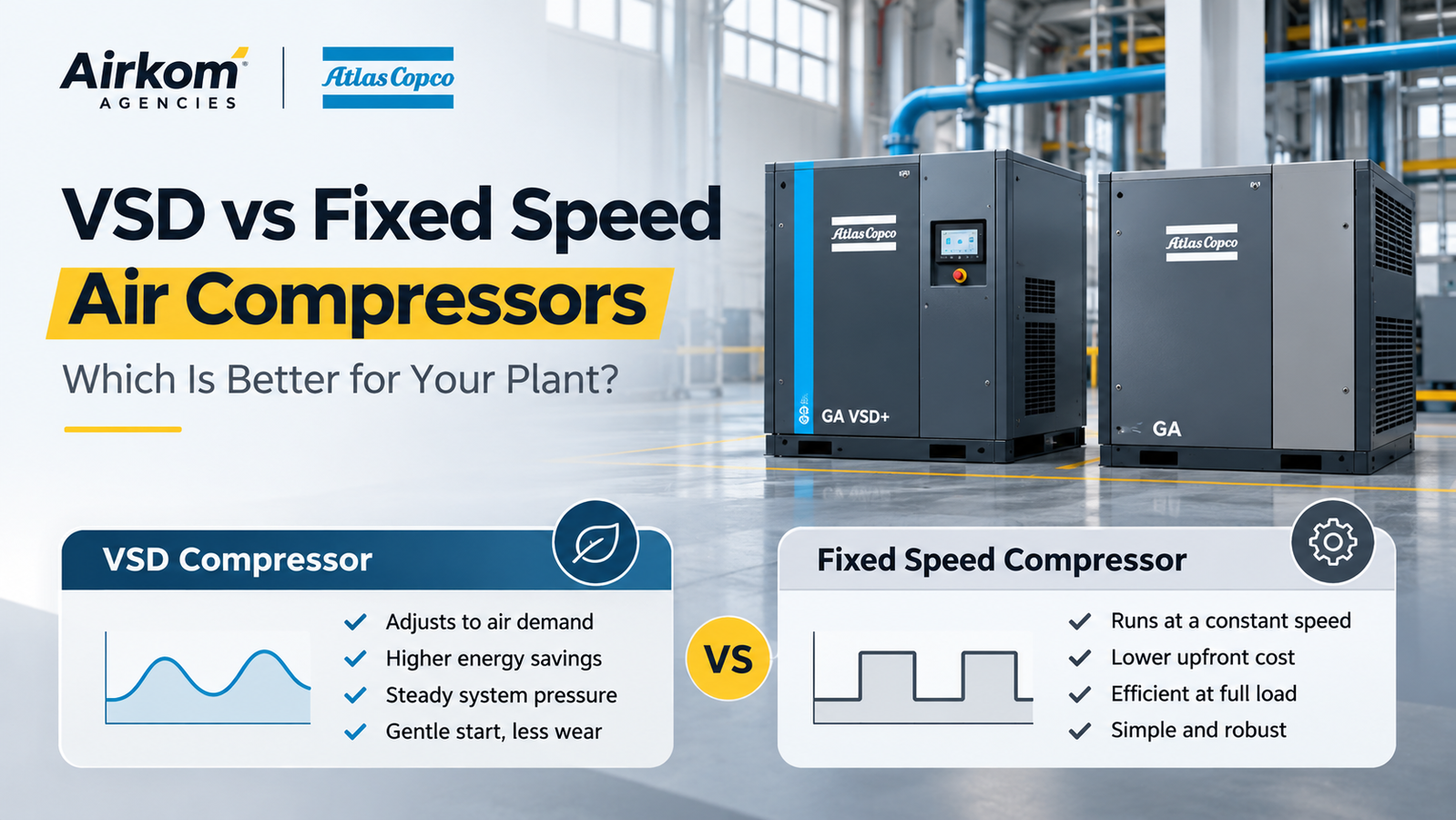
- Fixed speed or VSD. VSD costs more up front and saves electricity when demand varies. For a steady, high load, fixed speed can be enough.
- Oil-injected or oil-free. Oil-free machines cost more and are used where oil in the air cannot be tolerated.
- Air treatment. Dryers, filters, receivers and condensate handling. A quotation that leaves these out is not directly comparable.
- Piping and installation. Distance, pipe material and site conditions.
- Controls and monitoring. Central controllers and remote monitoring for multi-compressor rooms.
- Warranty, commissioning and service plan. What is included in the first years.
For plants that run long hours, electricity usually makes up most of the cost of owning a compressor. A machine with lower specific power, meaning less electricity per unit of air, can repay a higher purchase price within a few years. Ask every supplier for specific power at your operating pressure, not just at the catalogue rating.
Why local service matters more in a continuous process
In a batch process, an hour of lost compressed air can mean a spoilt batch, a restart procedure and a chain of delays. That changes what you should demand from a supplier.
Engineers close to your plant
Ask where the service engineers are based. Response time depends on distance, especially when traffic and highway delays are involved. A branch inside Vapi puts an engineer within reach of the industrial estate far faster than a team coming from another city.
Genuine spares in stock nearby
Common wear items such as oil, oil filters, air filters and separator elements should be available locally. For critical machines, keep a small stock on site as well, so that routine service never waits on delivery.
Backup plans
Even a well-maintained compressor can fail. Decide in advance what happens if it does. Options include a standby compressor in the room, an agreement for a rental unit, or a multi-compressor setup where the loss of one machine does not stop the plant.
Planned maintenance
A service plan that follows running hours, uses genuine parts, and includes dryers and filters keeps small problems from becoming stoppages. For plants running 24 hours, it is better to schedule maintenance during planned shutdowns than to wait for a fault.
Renting a compressor in Gujarat: when it helps
Rental units suit several situations in process plants:
- Your compressor has failed and the repair will take time
- A planned shutdown or turnaround, when the main machine is overhauled
- A short-term increase in production
- A trial run to confirm your air demand before you decide what to buy
Ask about delivery time, running hour limits, who is responsible for servicing and what the rate includes. Availability depends on the machine and your location, so contact the team early rather than during a breakdown.
Cutting the cost of compressed air in a continuous plant
Continuous plants have the most to gain from fixing waste, since every saving repeats across thousands of hours.
- Measure first. Log air demand, power and pressure for a week. Calculate your specific power.
- Find and repair leaks. An ultrasonic survey often finds a surprising share of production lost to leaks.
- Lower the pressure to what the process truly needs, one step at a time.
- Clean intake filters and coolers on a schedule suited to the dusty, humid conditions.
- Add a VSD compressor to follow changing demand, with fixed speed machines carrying the steady base load.
- Sequence the machines with a central controller.
- Recover heat where you need hot water, such as for cleaning, washing or process heating.
Common compressed air problems in process plants
Most of the calls a distributor receives from plants like yours fall into a few patterns. Knowing them helps you spot trouble early.
- Water in instrument or tool lines. Usually an undersized or overloaded dryer, a blocked drain or a bypassed filter. Check the dew point at the dryer outlet first.
- Compressor tripping on high temperature. Most often a dirty cooler, a blocked intake filter or poor ventilation in the compressor room, made worse by hot weather.
- Pressure falling at the far end of the plant. Typically leaks, clogged filters or undersized pipework, not a weak compressor.
- Oil in the air system. Often a worn separator element or a filter that was changed late or replaced with a poor copy.
- High electricity bills with no change in production. Look for leaks, a pressure setpoint that crept up, or machines running unloaded.
- Frequent starts and stops. Usually an oversized machine, a small receiver or a control setting that needs review.
Most of these are cheaper to fix early than after a stoppage, which is the case for regular inspections and a service plan built around your running hours.
Questions to ask any air compressor dealer in Vapi
- Are you an authorised distributor for this brand?
- Do you have a branch and engineers in Vapi itself?
- Which genuine spares do you keep in stock locally?
- Will you measure my air demand before recommending a size?
- How will you meet my required air purity, and can you document it?
- What backup do you offer if my machine stops?
- What does your service plan cover, and how fast do you respond to breakdowns?
- Can you show installations in plants like mine?
Serving Vapi and the wider Gujarat belt
Airkom Agencies is an authorised Atlas Copco distributor with its head office in Parel, Mumbai, and a branch and stock point in Vapi, along with a stock point at Mahape. Since 1987, the company has completed more than 1,000 installations for over 800 industrial clients, backed by a network of more than 70 dealers across India. Industries served include chemical and petrochemical, pharmaceuticals, dyes and pigments, plastics, pulp and paper, packaging, food and beverage and textile, among others.
Our range covers oil-injected and oil-free screw compressors, dryers, filters, blowers, nitrogen generators and AIRnet piping, along with rentals, genuine spare parts, service and maintenance. For plants in and around Vapi, including the surrounding industrial areas, the Vapi branch is the first point of contact.
Frequently asked questions
Do you have a branch in Vapi?
Yes. Airkom Agencies has a branch and stock point in Vapi, in addition to its head office in Mumbai and a stock point at Mahape.
Which compressor is best for a pharma plant in Gujarat?
Most pharma applications where the air touches the product or packaging use oil-free compressors with suitable dryers and filters, specified to the purity class your quality system requires. The right size depends on your air demand, which is best measured rather than estimated.
Can I get a nitrogen generator along with the compressor?
Nitrogen generators are part of the range. They use compressed air, so the compressor, dryer and generator should be sized together. If you use nitrogen for blanketing or purging, ask for a cost comparison against cylinders or bulk supply.
What information do I need for a quotation?
Your required air quantity, working pressure, operating hours, the air quality needed, available space and power supply, and whether it is a new installation or a replacement. If you do not know your air demand, ask for a measurement.
How quickly can a service engineer reach my plant?
Response time depends on your location and the nature of the problem, so ask for the usual response commitment in writing as part of any service plan.
Do you supply spares for compressors not bought from you?
For Atlas Copco machines, genuine spares are available through the distributor network. Contact the team with your machine model and serial number to check availability.
Next step
The best way to buy a compressor for a process plant is to start with your process, not a catalogue. Tell us your industry, air requirement, pressure, working hours and the quality of air you need, and our team will recommend a machine with the right air treatment, show you the running cost alongside the purchase price and set out a service plan that fits your shutdown schedule.
Request a compressor quotation from Airkom Agencies or call +91 79779 90375.